Showing posts with label RIPA. Show all posts

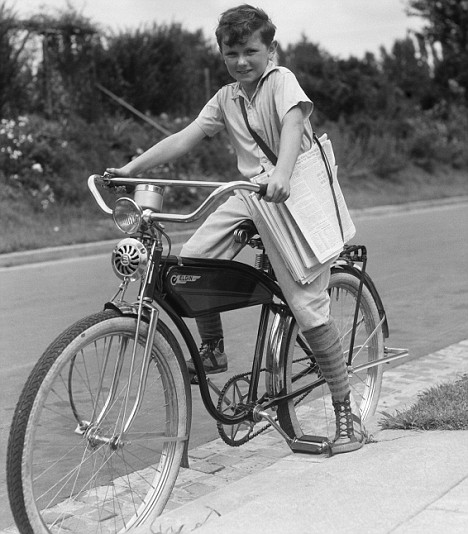
New target for the anti-terror spies: Village paperboys - for not having the correct paperwork

08:02 by Editor · 0 Post a comment on AAWR


They creep around in the dark spreading misery, rumour and secrets from inside Westminster. 

Even so, paperboys and girls are hardly likely to pose a threat to national security. 

One local council, however, thought it necessary to use swingeing anti-terror laws against them.

Cambridgeshire County Council used the controversial Regulation of Investigatory Powers Act (RIPA) to spy on eight paperboys thought to be working without permits. 

It sent undercover council officers to lurk outside a Spar in the village of Melbourn and take notes on the movements of the boys. 

The evidence was used in a criminal prosecution of the shop's owners for employing five of the boys without the correct documentation. 

Cambridgeshire's approach is just the latest example of local authorities using the RIPA for minor misdemeanours. 

Such activities have been likened to those of the Stasi, the East German secret police. 

A Cambridgeshire bylaw states that all paperboys must have a work permit issued by the council and signed by the child's employer, headteacher and parents. 


Working children must also be over 13 and cannot start work until after 7am. 

This week Cambridge Magistrates' Court was told that Dips Solanki, 42, and his wife Rashmi, 38, had failed to get the correct work permits for five paperboys.


Prosecutor Simon Reeve told the court that the couple ignored letters and visits from a child employment officer. He said that although eight applications for work permits had been sent to the children's school, only three were signed.


He produced the surveillance to prove the boys had been working.

The Solankis were found guilty of failing to comply with the bylaw and now have a criminal record. They were given a six-month conditional discharge.

All the boys concerned were between 13 and 16. Other than not having the correct paperwork, they were working legally.


Yesterday, the couple insisted that there had simply been a paperwork mix-up. They denied that they had been warned by council officials - and said the authority was using a 'hammer to crack a nut'.

Mrs Solanki said: 'They should only do such things for a serious crime. We're innocent people trying to make an honest living. It's ridiculous and was a complete waste of everyone's time.'

Andrew Lansley, Tory MP for South Cambridgeshire, agreed, saying: 'These powers should only be used for the scope they were intended, which is to tackle serious crime and terrorism.' But a Cambridgeshire Council spokesman said: 'Delivering heavy bags early in the morning is potentially very hazardous.

'We do not want to wait until someone has an accident before we start to uphold the law properly.'

The Act was introduced in 2000. As well as allowing spying in the interests of national security, it also allows state agencies such as councils, NHS trusts and the fire service to act secretly in the interests of 'protecting public health'. continues here

Anti-terrorism laws used to spy on noisy children

22:34 by Editor · 0 Post a comment on AAWR

Councils are using anti-terrorism laws to spy on residents and tackle barking dogs and noisy children. An investigation by The Sunday Telegraph found that three quarters of local authorities have used the Regulation of Investigatory Powers Act (RIPA) 2000 over the past year. 

The Act gives councils the right to place residents and businesses under surveillance, trace telephone and email accounts and even send staff on undercover missions. 

The findings alarmed civil liberties campaigners. Shami Chakrabarti, the director of Liberty, said: "Councils do a grave disservice to professional policing by using serious surveillance against litterbugs instead of terrorists." 

The RIPA was introduced to help fight terrorism and crime. But a series of extensions, first authorised by David Blunkett in 2003, mean that Britain's 474 councils can use the law to tackle minor misdemeanours. 

Councils are using the Act to tackle dog fouling, the unauthorised sale of pizzas and the abuse of the blue badge scheme for disabled drivers. 

Among 115 councils that responded to a Freedom of Information request, 89 admitted that they had instigated investigations under the Act. The 82 councils that provided figures said that they authorised or carried out a total of 867 RIPA investigations during the year to August 

Durham county council emerged as the biggest user, with just over 100 surveillance operations launched during the period. Newcastle city council used the powers 82 times, and Middlesbrough council 70 times. 

Derby council made sound recordings of a property after a complaint about noisy children. 

Surveillance operations aimed at individual homes and businesses can last for months. Calderdale council in West Yorkshire began "direct covert surveillance" targeting one business in May that is still going on. 

Local authorities including Bassetlaw, Easington, Bolsover and Darlington have placed houses under video or photographic surveillance to tackle problems such as anti-social behaviour, unauthorised entry into gardens and benefit fraud. Others admitted using council staff to follow residents to determine whether they were working while claiming benefits. 

Northampton council, which did not implement the Act during the past 12 months, said that it had used the legislation on five previous occasions to tackle dog fouling. Councils have used the RIPA to recruit children for surveillance operations. Dudley and County Durham exploited the Act to send children into shops with secret video and audio equipment to see whether they could buy cigarettes and alcohol. Officials in Durham have mounted 60 RIPA investigations against these kinds of businesses in the past 12 months. 

Sir Jeremy Beecham, the acting chairman of the Local Government Association, which represents councils, said last night: "Councils are tuned into people's fears about the potential overzealous use of these crime- fighting powers. They know that they're only to be used to tackle residents' complaints about serious offences, like when benefit cheats are robbing hard-working taxpayers or fly-by-night traders are ripping off vulnerable pensioners." 

He added: "Councils do not use these powers to mount fishing expeditions. First and foremost it is about protecting the public, not intruding on privacy. Crime-busting powers are targeted at suspected criminals and used only when absolutely necessary." 
Smokers, drivers and even emails are being monitored 

* Newcastle City Council used the Act to monitor noise levels from smoking shelters at two different licensed premises. The council has twice used the legislation to monitor noise from a vet’s practice following a complaint about barking. continues here